

Running Google Ads without a strategy will most likely just burn your money and waste your time, rather than create any opportunities. Loads of businesses just jump straight into Google Ads and have high hopes of achieving conversions at an instant. However, without the necessary planning towards a strategic, targeting and optimization approach, any amount of huge ad spend can just get lost in a black hole with not even a single profitable conversion to show for it.
When run effectively, Google Ads is one of the most effective digital advertising tools any business could possibly have under their belt. It gives you the opportunity to advertise to potential customers exactly when they are researching a particular product, service or solution online. However, just because you’re running a Google Ads campaign, it’s no guarantee that success will be served on a silver platter.
Whether you’re running a small ad budget of a few hundred dollars a month or undertaking massive ad campaigns, the key principles of effective Google Ads management remain the same. Your campaign structure and targeting; the words within your ad copy; and your ongoing optimization – this is what is ultimately going to set you apart from having to throw your money away on a failed ad campaign.
1. Start With Crystal-Clear Campaign Goals
Before you write a single headline or set a bid, you need to know exactly what you want from this campaign. Awareness? Leads? Sales? Phone calls? Each goal calls for a different campaign structure, bidding strategy, and set of metrics. Mixing objectives inside one campaign is one of the most common reasons budgets bleed without producing results.
Map your goal to a campaign type. Lead generation campaigns belong in Search. Visual brand storytelling belongs in Display or YouTube. Product-specific traffic belongs in Shopping. Starting with clarity here shapes every decision you make afterward — and it is one of the foundational Google Ads best practices that many advertisers skip too quickly.
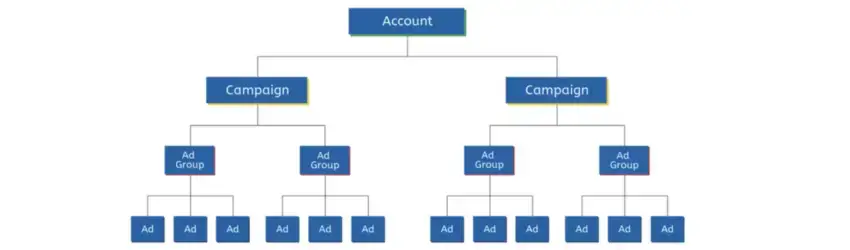
2. Build a Tightly Themed Ad Group Structure
When ad groups contain too many unrelated keywords, campaigns get hard to manage. The ads start to feel broad and less relevant. That can lower Quality Scores and drag down ad performance. A better move is to keep ad groups tight. Group only a few closely related keywords together. This can actually simplify writing ad copy which can match exactly what your audience is really searching for. When your keywords, ad copy and landing page are all aligned on a single goal, your campaign feels that much more relevant. Higher relevance often translates into higher click-through rates. So, this will result in improving Quality Scores. Cost-per-click drops. Conversions get stronger over time.
3. Use Negative Keywords Religiously
Negative keywords are the unsung heroes of a well-run account. Without them, your ads can show up for search queries that have nothing to do with what you offer. This burns the budget on irrelevant clicks from people who will never convert.
Add irrelevant terms to your negative keyword list at the campaign or account level. Over time, this single habit can dramatically improve the efficiency of your spend and lift your return on ad spend without touching your bids.
4. Write Ads That Earn the Click
A great ad is not just a list of features. It is a promise. It tells the reader exactly what they get, why it matters, and why they should act now. Responsive Search Ads give you space to test multiple headlines and descriptions, and Google will rotate them to find the combinations that perform best.
Lean into specificity. Numbers, deadlines, unique value propositions, and clear calls to action outperform vague copy every time. “Save 30% on Annual Plans — Offer Ends Sunday” will almost always beat “Great Deals Available Now.” Among all Google Ads best practices, improving your ad copy has one of the highest returns for time invested.
5. Match Landing Pages to Ad Intent
Sending paid traffic to your homepage is one of the most common and costly mistakes in paid search. Your homepage serves everyone. Your landing page should serve only the person who just clicked your specific ad. The message, the offer, and the call to action should flow seamlessly from the ad the visitor just read.
A focused, fast-loading page that matches user intent will lower your cost-per-acquisition and improve your overall return on ad spend more than almost anything else you can change.
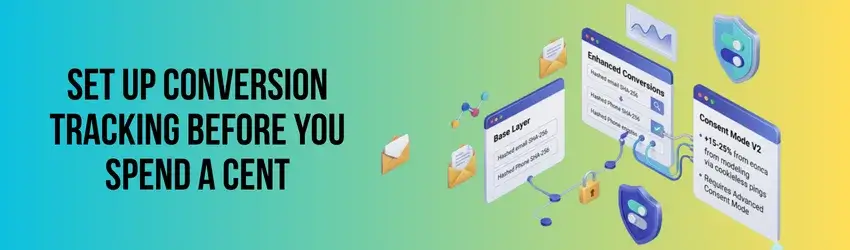
6. Set Up Conversion Tracking Before You Spend a Cent
You cannot optimize what you cannot measure. Conversion tracking is the foundation of every data-driven Google Ads decision. Without it, you are flying blind — spending money and hoping something works.
Set up Google Tag Manager and configure goals for every meaningful action: form submissions, phone calls, purchases, sign-ups. Import these goals into Google Ads so the platform’s smart bidding algorithms have the data they need to optimize toward real outcomes. This single step changes everything about how your campaigns learn and improve over time.
7. Choose the Right Bidding Strategy for Your Stage
Smart bidding strategies like Target CPA and Target ROAS are powerful — but they need data to work. Switching to an automated strategy with fewer than thirty conversions in the past thirty days often leads to erratic results because the algorithm has nothing meaningful to learn from.
New campaigns should typically start with Manual CPC or Maximize Clicks to gather data. Once you hit a healthy conversion volume, transition to a conversion-based strategy. This staged approach is one of the Google Ads best practices that prevents you from handing over budget control before the system is ready to handle it responsibly.

8. Schedule Ads Based on When Your Audience Converts
Not all hours and days are created equal. Run your conversion data through the Dimensions or Day-of-Week reports in Google Ads and you will almost always find patterns — times when your cost-per-conversion is dramatically lower and times when you are spending significantly more for worse results.
Use ad scheduling to reduce bids or pause entirely during low-performing windows. Concentrate your budget where it works hardest. Even modest scheduling adjustments based on real data can noticeably improve your return on ad spend without requiring a budget increase.
9. Use Audience Layering to Sharpen Your Targeting
Keywords explain what users are searching for. Audiences explain who they are. Audience signals placed on top of keyword targeting enable you to modify bids according to behavior, intent, and brand relationship.
Bid higher for previous website visitors who searched for terms central to your business. Use Customer Match to target individuals already in your email list. Reach people who are actively seeking within your vertical using In-Market audiences. These layers are not excluding potential viewers, they simply direct your spend towards higher probability converting prospects.
10. Audit Your Search Terms Report Every Week
Broad and phrase match keywords can trigger your ads for searches you never anticipated — some valuable, some wasteful. The Search Terms report shows you exactly what triggered your ads and whether those searches led to conversions.
Make it a weekly habit to mine this report for two things: new negative keywords to block irrelevant traffic, and new exact match keywords to add when you find high-performing search terms that deserve their own dedicated bid. This active management discipline separates accounts that drift from accounts that consistently improve their return on ad spend.
11. Test Continuously and Interpret Honestly
The best Google Ads accounts are not set and forgotten. They are living, breathing systems that get better over time because someone is paying attention and running structured experiments. Ad copy tests, landing page variants, bidding strategy experiments, audience exclusions — there is always something worth testing.
The key is to test one variable at a time and wait long enough for statistically meaningful data before drawing conclusions. Avoid the temptation to call winners too early. A test that runs for three days rarely tells you anything useful. Let experiments breathe, read the results honestly, implement what works, and move to the next test. This cycle is the real engine behind every high-performing account.
Putting It All Together
None of these practices work on their own. They are interconnected. Tight ad groups make for better ad copy. And better ad copy with a relevant landing page raises Quality Scores. Higher Quality Scores reduces your cost-per-click. Low cost-per-click means your budget goes further. More data from better-tracked conversions helps you bid smarter. Everything builds on itself.
Following these Google Ads best practices doesn’t need an agency budget or a team of specialists. It requires steady attention and a willingness to look at data honestly, plus the discipline to act on what you find.
Start where your account feels weakest. Fix that. Then move on. Every dollar you waste on a poorly structured campaign is a dollar you could have spent reaching someone ready to buy. Tighten your approach. Keep learning. Watch what happens to your return on ad spend when intention replaces guesswork.