
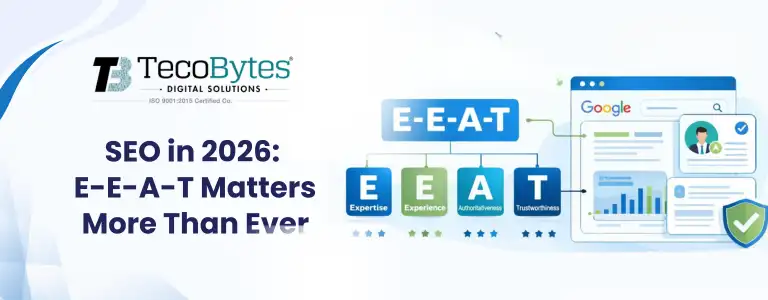
If you’ve been watching SEO trends you already know things have changed a lot. The days of stuffing keywords into a page and watching it climb the rankings are over. In 2026 Google isn’t just reading your content. It evaluates it. And the framework at the center of that evaluation is E-E-A-T.
Search engines got smarter. Users got more skeptical. Google’s algorithms now filter out the content that is just made to rank. Whether you run a personal blog or an e-commerce site. Or you manage a full-scale content operation. Understanding E-E-A-T isn’t optional anymore. It’s the foundation your whole SEO strategy has to be built on.
What Is E-E-A-T?
E-E-A-T refers to Experience, Expertise, Authoritativeness and Trustworthiness. It’s a quality framework which is used by Google’s human Quality Raters to judge whether content really helps readers or just pretends to.
Here is exactly what each part means.
Experience
It is the new part. It changes things. It asks whether the writer really experienced what they are writing. A travel guide by someone who has visited the place holds more weight than one by someone who only read about it. Google wants real-world knowledge in the content.
Expertise
The expertise is about depth and accuracy. Does the author really understand the topic? In areas like health, finance and law Google calls these Your Money or Your Life (YMYL) topics. Expertise gets checked closely there. One factual slip can wreck your credibility with users and with the algorithms.
Authoritativeness
Authoritativeness is your reputation on the wider web. Do credible sites link to you. Do other experts reference your work? Authority builds up over time with steady, solid output and real recognition in your niche.
Trustworthiness
It holds it all together. It means being transparent. Clear authorship. Honest content. Secure sites. Accurate information. Being a source people can trust. Google sees this as the most critical of the four signals. All four together tell Google the content is worth showing to real people.
Key takeaway
Together, these four pillars (E-E-A-T) tell Google: this content is worth showing to real people.

What Is the Role of E-E-A-T in SEO?
E-E-A-T helps search engines to judge the quality of a webpage. After checking a webpage as per EEAT the search engines decide where to place it in the results. It’s a kind of framework for algorithms. It tells them if content looks dependable enough to show to people. Pages that show real expertise and signs of trust usually do better than pages that feel shallow or unclear.
It also changes how other ranking signals are read. The backlinks, content structure, and user engagement carries more weight when they come from a source that appears trustworthy and authoritative. So E-E-A-T isn’t just a single ranking factor. It just makes other SEO signals carry more weight by adding credibility. So E-E-A-T works like a quality checkpoint. It helps search engines favor content that seems reliable and useful. The result is higher rankings for pages users can actually depend on.
In 2026, the connection between E-E-A-T and rankings has never been tighter for a few key reasons:
AI-generated content is everywhere
The web is filled with machine-written pieces that cover a topic but bring no original thought or experience. Google has been aggressively devaluing that kind of content. E-E-A-T signals are its main weapon. If your content sounds like a robot wrote it with no skin in the game, it’s going to struggle.
User behavior signals reinforce
E-E-A-T. When people trust your content they stick around and interact more. They also come back. Google tracks those patterns. Content that shows real experience and trust gets better engagement. That engagement sends positive signals to the algorithm.
YMYL sites feel it most
If your site covers health or finance, offers legal advice, or deals with topics where bad info could actually harm someone, Google holds it to a very high bar. Thin, unverified content in those areas gets hit hardest during core updates.
The bottom line
E-E-A-T isn’t a separate tactic you layer on top of your SEO. It is your SEO, in 2026.

How to Implement E-E-A-T Effectively
Knowing what E-E-A-T is and actually building it into your content strategy are two different things. Here’s how to do it in a way that’s practical and sustainable:
Show real experience not just information
When you write a product review, share what actually happened when you used it. When you cover a how-to topic show your process like screenshots, photos, personal anecdotes, lessons you learned the hard way. This layer of personal experience is what separates your content from the generic articles.
Build author profiles that mean something
Every piece of content should have a clear and credible author. Create detailed author bio pages that include credentials, professional background, social profiles, and other published work. For specialized topics consider bringing professional reviews and fact check in your content which will matter.
Earn backlinks from respected sources
Authority is largely built off-page. Focus on link-building strategies that attract links from websites which are already trusted by your audience — industry publications, reputable news outlets, academic sources or recognized thought leaders in your niche. Guest posting on authoritative platforms also builds your reputation.
Make trust signals impossible to miss
Provide your contact information clearly. Add an About Us page. Say who you are and why you’re qualified to cover your topics. And use HTTPS. Show reviews and testimonials where it makes sense. Cite your sources. Link to the original data and research.
Update your content regularly
Stale content is a trust signal in the wrong direction. Review your top pages on a schedule. Update statistics and examples. Changing recommendations when needed will help to keep things accurate and current.
Structure your content for clarity
When the content is properly structured it’s easy to scan. Use clear headings and organize information in a logical flow so readers can follow. If someone lands on your page and immediately gets what they need, that’s what E-E-A-T working in real time.
E-E-A-T Checklist
Use this as your go-to reference every time you publish or audit content:
Common Mistakes to Avoid
Conclusion
In 2026 seo rewards one thing above all else. Being genuinely useful to real people. As AI generated content is spreading on the web, Google uses E-E-A-T to measure the usefulness of the content. If you are creating the content from real knowledge with honest experience and a genuine desire to help your audience, you’re already on the right path. Now the work is making sure that shows. In your author bios, in how the site is organized, in the backlinks pointing at you and in every word you publish. Stop chasing algorithms and start building trust. Because in 2026, trust is the algorithm.