
Introduction
WhatsApp Business API is one of the most impactful communication platforms for businesses which want to excel at customer engagement . Worldwide users are largely using WhatsApp in their daily life.
So, businesses now grasp the value that is presented when they reach out to their customers on a channel that their customers use on a day to day basis. As compared to older channels of communication such as phone support or emails, the WhatsApp Business API will now make businesses capable of delivering quicker replies, personalized communications, automated support, and real-time communication at scale.
Customer expectations have developed significantly throughout recent years. Now customers expect instant replies, easy communication methods, and smooth communication services. Businesses that do not meet customer expectations may struggle to hold their customers’ satisfaction and loyalty, and here the WhatsApp Business API helps to gain the competitive advantage in the market and enhance efficient communication and personalized customer interactions.
No matter if your business is involved in the field of ecommerce, SaaS, health or wellness, education, financial services, travel or a local establishment the WhatsApp Business API helps to build better engagement with your customers which leads to growing of the business.
What Is WhatsApp Business API?
The WhatsApp Business API is an enterprise-level messaging solution which is designed for medium-sized and large businesses that need to communicate with customers at scale.
Unlike the standard WhatsApp application or WhatsApp Business App, the API allows businesses to:
- Automate conversations
- Integrate with CRM systems
- Manage high message volumes
- Support multiple agents
- Deliver notifications
- Track customer interactions
- Scale customer support operations
The WhatsApp Business API is not a standalone application. Instead, it connects with business systems through approved providers and integrations.
This allows businesses to create sophisticated customer communication workflows while maintaining compliance with WhatsApp policies.
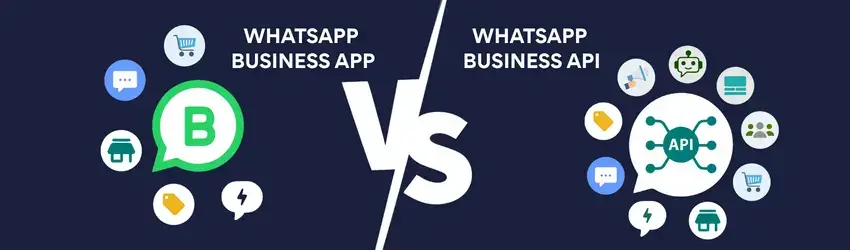
WhatsApp Business App vs WhatsApp Business API
Many businesses confuse the WhatsApp Business App with the WhatsApp Business API.
WhatsApp Business App
Designed for:
- Small businesses
- Local stores
- Individual entrepreneurs
- Freelancers
Features include:
- Business profile
- Quick replies
- Product catalog
- Greeting messages
- Basic automation
WhatsApp Business API
Designed for:
- Growing businesses
- Enterprise organizations
- Customer support teams
- Large ecommerce stores
Features include:
- Advanced automation
- CRM integration
- Multi-agent support
- Bulk notifications
- Chatbots
- Customer journey tracking
- Scalable messaging
The WhatsApp Business API provides significantly more flexibility for customer engagement strategies.
Why Customer Engagement Matters in 2026
Customer engagement is no longer limited to answering questions or resolving complaints.
Modern businesses focus on:
- Relationship building
- Personalized communication
- Customer retention
- Loyalty improvement
- Customer satisfaction
- Brand trust
Businesses with strong customer engagement often experience:
- Higher retention rates
- Increased repeat purchases
- Better reviews
- Stronger referrals
- Higher customer lifetime value
The WhatsApp Business API supports these goals through direct and convenient communication.
How WhatsApp Business API Improves Customer Engagement
Real-Time Communication
One of the biggest advantages of the WhatsApp Business API is real-time communication.
Customers can contact businesses instantly and receive responses without waiting hours or days.
Real-time interactions improve:
- Customer satisfaction
- Trust
- Problem resolution speed
- Engagement quality
When used correctly, rapid communication produces a better customer experience than traditional methods of customer support.
Personalized Customer Conversations
Now people are expecting more personalization.
WhatsApp Business API enables businesses to use the customer data for sending targeted messages.
Examples include the following:
- Order updates
- Appointment reminders
- Product recommendations
- Renewal notices
- Personalized offers
If the message is relevant to the customer’s needs and interests, the customer is more likely to respond.
Automated Customer Support
Automation plays a major role in modern customer engagement.
Using the WhatsApp Business API, businesses can automate:
- Frequently asked questions
- Order status updates
- Appointment confirmations
- Customer onboarding
- Lead qualification
Automation provides quick responses. So, the staff can focus on complicated issues.
Multi-Agent Support
As your company grows, you won’t be able to handle every single customer interaction by yourself anymore. The WhatsApp Business API allows you to scale support across many different support agents by using a single system.
Benefits include:
- Faster responses
- Better collaboration
- Improved efficiency
- Higher customer satisfaction
This capability is especially important for growing businesses handling large volumes of inquiries.
Key Features of WhatsApp Business API
Automated Messaging
Automated messages help businesses remain available even outside working hours.
Common automation examples include:
- Welcome messages
- Order confirmations
- Shipping notifications
- Payment reminders
- Follow-up messages
Automation improves consistency while reducing manual workload.
Chatbots
Chatbots have become increasingly sophisticated in 2026.
Businesses use chatbots to:
- Answer questions
- Collect information
- Qualify leads
- Schedule appointments
- Guide customers
Chatbots improve customer engagement by providing immediate assistance.
Interactive Messaging
The WhatsApp Business API supports interactive message formats such as:
- Quick reply buttons
- Call-to-action buttons
- Product messages
- List messages
Interactive content improves user engagement and simplifies customer actions.
Rich Media Sharing
Businesses can send:
- Images
- Videos
- PDFs
- Documents
- Product catalogs
Visual content often increases engagement compared to text-only communication.

Customer Journey Integration
The WhatsApp Business API can connect with various business systems.
Examples include:
- CRM platforms
- Ecommerce software
- Marketing automation tools
- Customer support systems
This integration creates a seamless customer experience across multiple touchpoints.
Customer Engagement Use Cases
Ecommerce Businesses
Online stores use the WhatsApp Business API for:
- Order confirmations
- Shipping updates
- Cart recovery
- Product recommendations
- Customer support
These interactions help improve customer satisfaction and conversion rates.
Healthcare Providers
Healthcare organizations use WhatsApp for:
- Appointment reminders
- Follow-up communication
- Patient support
- Prescription notifications
Convenient communication improves patient engagement.
Educational Institutions
Schools and training organizations use the WhatsApp Business API for:
- Admission updates
- Student support
- Course reminders
- Event notifications
This helps maintain better communication with students.
Financial Services
Banks and financial institutions often use WhatsApp for:
- Transaction alerts
- Verification notifications
- Customer support
- Account updates
Secure messaging improves customer trust.
Lead Generation Through WhatsApp Business API
The WhatsApp Business API is not only a support tool but also a lead-generation channel.
Businesses can:
- Capture inquiries
- Qualify prospects
- Schedule consultations
- Provide product information
- Nurture leads
The conversational nature of WhatsApp often leads to higher engagement than traditional forms.
Improving Customer Retention
Customer retention is often more profitable than acquiring new customers.
The WhatsApp Business API helps retain customers through:
- Personalized follow-ups
- Loyalty programs
- Product updates
- Customer feedback requests
- Special offers
Regular communication strengthens customer relationships over time.
WhatsApp Business API for Marketing
Businesses increasingly use WhatsApp for permission-based marketing.
Marketing activities include:
- Product launches
- Promotional campaigns
- Seasonal offers
- Event invitations
- Customer education
Because messages appear directly in a customer’s chat inbox, engagement rates are often significantly higher than email marketing.
Best Practices for Customer Engagement
Obtain Customer Consent
Businesses should always secure permission before sending marketing messages.
Permission-based communication improves:
- Trust
- Engagement
- Compliance
Focus on Value
Every message should provide value.
Examples include:
- Useful information
- Exclusive offers
- Support updates
- Educational content
People will lose interest very quickly to messages that have no value for them.
Avoid Excessive Messaging
Sending too many messages can create frustration. Businesses should focus on quality rather than quantity.
Personalize Interactions
Personalization leads to higher engagement. So, collect and use the customer data in a responsible way to give personalised experience.
Respond Quickly
Quick answers continue to be the most crucial factor for customer satisfaction. The WhatsApp Business API can help companies be reactive on a larger scale.
Common Mistakes Businesses Make
Treating WhatsApp Like Email
WhatsApp is conversational. Messages should feel like natural and customer-focused.
Over-Automating Conversations
Automation is helpful but it should not replace the entire human interaction. Customers often need access to real support agents.
Ignoring Analytics
Businesses should track:
- Response rates
- Customer satisfaction
- Engagement metrics
- Conversion rates
Analytics help improve communication strategies.
Sending Irrelevant Messages
Poor targeting can reduce customer trust and engagement.
The Future of WhatsApp Business API
The role of the WhatsApp Business API continues expanding as customer communication becomes increasingly digital.
Future developments are expected to include:
- More advanced AI automation
- Smarter chatbots
- Better personalization
- Enhanced integrations
- Improved customer analytics
Businesses that adopt conversational communication strategies early will likely gain significant advantages over competitors.
Final Thoughts
Now the WhatsApp Business API has changed the landscape of business with automation, personalization, and speed of response. It also improves the customer experiences across many sectors. In today’s society the customer expectations are extremely high.
So, businesses need to use WhatsApp Business API to give fast, effortless and meaningful communication to their customers . This tool also helps in lead generation , retention or marketing . With a well-implemented strategy, the API can improve customer satisfaction, build brand loyalty and drive conversion and long-term relationships. For any business looking to expand and excel in customer engagement, the WhatsApp Business API should no longer be seen as a choice but rather a necessity.