A business may invest heavily in advertising, website development, and social media marketing, yet still struggle to respond to customer inquiries quickly or convert visitors into paying customers. To overcome this problem the AI chatbots came into effect. Today’s customers want real-time communication, swift resolutions, and customized interactions when they visit any business’s website. Companies that fail to provide these will often lose potential customers to competing businesses that do deliver superior communication.
Earlier, businesses largely depended on their human representatives to communicate with customers. But even though human interaction is still necessary, now customer expectations are rapidly evolving. Most of the online users are demanding instant answers regardless of time zone, working hours, or employees on hand. And this is what is causing AI chatbots to revolutionize lead generation and customer service for many businesses across the globe.
Today’s AI chatbots are more than just automated replies. They can understand users’ intentions, habits, preferences and context queries better than ever. Due to this most of the businesses are using chatbots for enhanced customer communication, automated customer support, automated lead qualification, higher conversions .

What Are AI Chatbots?
AI chatbots are automated conversational systems designed to interact with users through text or voice communication. Unlike traditional scripted bots, modern AI chatbots use artificial intelligence, machine learning, and natural language processing to understand user intent and respond more naturally.
AI chatbots are commonly integrated into:
- Websites
- Ecommerce stores
- Mobile apps
- Social media platforms
- Messaging applications
- Customer support systems
Businesses use chatbots for various purposes, including:
- Customer support
- Product recommendations
- Lead generation
- Appointment booking
- Order tracking
- FAQ responses
- Technical assistance
Advanced AI chatbots can also learn from previous interactions and improve responses over time.
Why AI Chatbots Matter More in 2026
Customer behavior has changed significantly.
Modern users expect:
- Instant responses
- Faster support
- Personalized experiences
- 24/7 communication
- Mobile-friendly interactions
- Convenient browsing experiences
Most users no longer want to wait hours for email replies or remain on long customer support calls. Businesses unable to respond quickly often experience lower engagement and weaker customer retention.
This shift in user expectations is one of the biggest reasons AI chatbots are becoming essential for modern businesses.
AI-driven customer interaction also supports growing digital behavior trends such as:
- Conversational search
- Voice assistants
- AI-powered browsing
- Mobile-first communication
- Automated customer journeys
Businesses adapting early to these trends are positioning themselves for stronger long-term growth.
How AI Chatbots Improve Customer Support
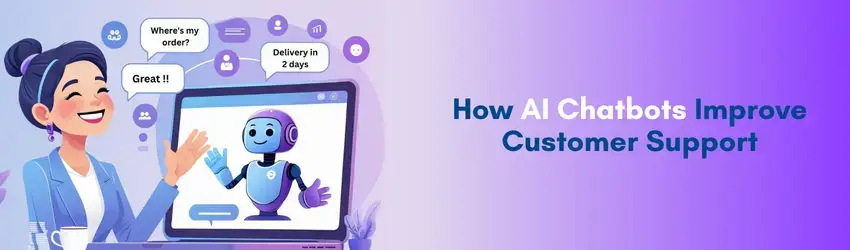
Customer support is one of the biggest areas transformed by chatbots.
Traditional support systems often struggle with:
- High response times
- Repetitive questions
- Limited working hours
- Large support volumes
- Staffing costs
Chatbots help businesses solve these problems more efficiently.
1. Instant Responses
One of the biggest advantages of chatbots is immediate communication.
Customers no longer need to wait several hours for basic responses.
AI chatbots can instantly answer questions related to:
- Pricing
- Services
- Products
- Order tracking
- Refund policies
- Technical issues
Faster responses improve customer satisfaction significantly.
2. 24/7 Customer Availability
It is more expensive to maintain 24/7 availability of human support. AI chatbots allow businesses to provide support at any time of day.
This becomes especially important for:
- Global businesses
- Ecommerce stores
- SaaS companies
- Hosting providers
- International customer bases
24/7 support improves customer trust while increasing business accessibility.
3. Reduced Support Workload
Many customer questions are repetitive.
Examples include:
- “Where is my order?”
- “What are your pricing plans?”
- “How do I reset my password?”
- “What are your business hours?”
AI chatbots automate these repetitive interactions, allowing human teams to focus on more complex issues. This improves operational efficiency while reducing support pressure.
4. Faster Problem Resolution
Modern AI chatbots can guide users through troubleshooting processes step by step.
For example:
- Website setup guidance
- Password recovery
- Hosting configuration
- Billing assistance
- Product recommendations
Faster issue resolution improves overall customer experience.
The Role of AI Chatbots in Lead Generation
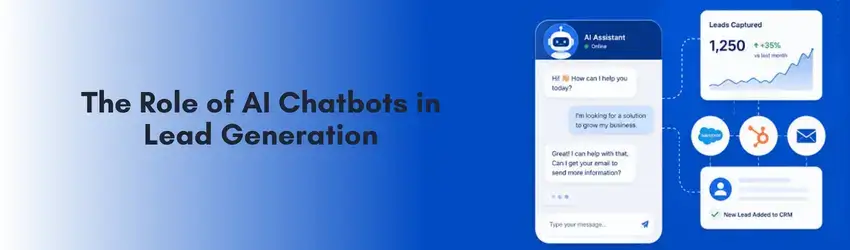
Lead generation is another major area where AI chatbots are creating strong business impact.
Earlier, businesses depended heavily on forms, email campaigns, or manual outreach for lead collection. However, modern users increasingly prefer conversational interactions instead of static contact forms.
AI chatbots improve lead generation by creating interactive customer journeys.
1. Engaging Website Visitors
Many website visitors leave without taking action.
AI chatbots help businesses engage users instantly through conversations.
For example, chatbots can ask:
- “How can we help you today?”
- “Which service are you looking for?”
- “Would you like a free consultation?”
- “Can we recommend a hosting plan for your business?”
These interactions increase engagement and encourage users to continue exploring.
2. Lead Qualification
AI chatbots can automatically qualify leads by collecting useful information such as:
- Budget
- Business size
- Industry
- Service requirements
- Project goals
This helps businesses identify high-quality leads more efficiently.
Sales teams can then focus on customers with stronger conversion potential.
3. Improved Conversion Rates
AI chatbots reduce friction during the customer journey and improves the conversion rates.
Instead of forcing users to complete long forms, businesses can guide visitors naturally through conversational interactions.
This often improves:
- Lead submissions
- Appointment bookings
- Demo requests
- Product inquiries
- Service consultations
Conversational engagement usually creates stronger conversion opportunities compared to static webpages alone.
4. Personalized Recommendations
Advanced AI chatbots can recommend products or services based on customer behavior and preferences.
For example:
- Ecommerce product suggestions
- Hosting plan recommendations
- SaaS package recommendations
- Service upgrades
Personalized interactions often improve customer satisfaction and sales performance.
AI Chatbots Improve User Experience
User experience has become one of the most important factors in digital business growth.
AI chatbots improve UX optimization by providing:
- Faster navigation assistance
- Instant answers
- Simplified communication
- Guided browsing experiences
- Reduced confusion
Visitors often feel more comfortable interacting conversationally instead of searching through multiple pages manually.
Businesses providing smoother experiences usually achieve:
- Higher engagement
- Better retention
- Stronger trust
- Increased conversions
AI Chatbots and Mobile Users
Mobile users now dominate internet traffic globally.
Typing lengthy emails or searching complicated menus on mobile devices can feel frustrating for users.
AI chatbots simplify communication significantly for mobile visitors.
Mobile-friendly chatbot experiences improve:
- Accessibility
- Convenience
- Faster interactions
- Customer satisfaction
This becomes especially important as conversational browsing continues growing.
AI Chatbots and AI Search Trends
AI-powered search systems are increasingly becoming conversational.
Users now interact with:
- AI assistants
- Voice search
- Conversational search engines
- Smart devices
This behavioral shift aligns closely with chatbot-based communication.
Businesses using AI chatbots are adapting more naturally to conversational digital environments.
As AI-driven search continues evolving, conversational experiences may become even more important for customer engagement and online visibility.
Common Mistakes Businesses Should Avoid
While AI chatbots offer major benefits, poor implementation may create negative experiences.
Using Robotic Responses
- Overly scripted chatbots often feel unnatural and frustrating.
- Businesses should create conversational and human-like interactions.
Ignoring Human Support
- AI chatbots should support human teams rather than replace them completely.
- Complex problems still require human expertise.
Poor Chatbot Placement
Businesses should place chatbots naturally without interrupting user experiences aggressively.
Lack of Personalization
- Generic responses reduce engagement quality.
- Modern AI chatbots should adapt conversations based on customer intent and behavior.
Ignoring Analytics
Businesses should regularly analyze chatbot performance, including:
- Conversion rates
- User satisfaction
- Engagement levels
- Common support questions
Continuous optimization improves chatbot effectiveness over time.
The Future of AI Chatbots
AI chatbot technology will likely become even more advanced over the next several years.
Future chatbot systems may include:
- Better emotional understanding
- Voice-based communication
- Deeper personalization
- Smarter automation
- AI-powered recommendations
- Advanced multilingual support
Businesses investing early in conversational AI systems may gain stronger competitive advantages as customer behavior continues evolving.
The future of customer interaction is becoming increasingly:
- Conversational
- AI driven
- Personalized
- Automated
- Mobile focused
Businesses relying only on traditional support systems may struggle as digital expectations continue rising.
Final Thoughts
In 2026, AI chatbots plays a major role in customer service and lead generation. Now people require instant, personalized and 24 hour services. So, businesses must require AI chatbots to attract the customers.
AI chatbots improve customer service by faster response times, reducing the workload of the staff, having higher availability, improving customer experience and will also improve lead generation by interacting with the visitors, qualifying the leads, growing the conversion rates and by enabling a more personal experience.
As AI communication continues to develop and expand its use, companies which adopt conversation technology are projected to grow, gain users and see improved customer satisfaction. In 2026 and further, AI chatbots will no longer be just a possibility, they will become essential for the execution of customer service, lead generation and digital growth.